

Welcome to a delicious journey through the flavors of Italy with our Italian Pot Roast Straccato. This traditional dish brings together a medley of flavors, from succulent beef to aromatic herbs and rich wine, crafting a dish that’s perfect for cozy family dinners or impressive dinner parties. Whether you’re a novice cook or a culinary expert, this recipe will guide you step by step to create an unforgettable meal.
Ingredients

- 3 lbs beef chuck roast
- 2 tablespoons olive oil
- 1 large onion, sliced
- 3 cloves garlic, minced
- 2 cups beef broth
- 1 cup red wine
- 1 can (14.5 oz) diced tomatoes
- 2 carrots, sliced
- 2 stalks celery, sliced
- 2 bay leaves
- 1 teaspoon dried rosemary
- Salt and pepper to taste
Equipments
Make sure to have the following equipment ready to make your Italian Pot Roast Straccato a smooth cooking experience:
- Heavy Dutch oven or a large pot
- Sharp knife
- Cutting board
- Stirring spoon
- Tongs
- Measuring cups and spoons
How to Make Italian Pot Roast Straccato – Step By Step
Step 1:
Begin by preparing your beef chuck roast. Pat it dry with a paper towel and season it generously with salt and pepper on all sides. This step ensures that your meat is flavorful and tender after cooking.
Step 2:
In a heavy Dutch oven, heat olive oil over medium-high heat. Once hot, add the seasoned beef roast. Sear all sides until they develop a rich, brown crust, usually about 2-3 minutes per side. This browning process locks in juices and elevates the flavor profile.
Step 3:
Remove the beef from the pot and set it aside. In the same pot, add sliced onions and garlic. Sauté them for 2-3 minutes until the onions are translucent and the garlic is fragrant.
Step 4:
Return the roast to the pot along with any accumulated juices. Add beef broth, red wine, and canned tomatoes. Stir in sliced carrots, celery, bay leaves, and rosemary. This mixture creates the liquid base that’s packed with depth.
Step 5:
Bring the pot to a simmer. Cover and lower the heat. Allow the roast to cook slowly for about 2 to 3 hours, or until tender. This low and slow method breaks down the collagen in the beef, resulting in meat that melts in your mouth.
Step 6:
Once cooked, remove the pot from heat. Carefully take out the bay leaves. Let the roast rest for a few minutes before serving. This rest period helps redistribute the juices, ensuring each slice is juicy and flavorful.
How to Serve Italian Pot Roast Straccato
Serve your Italian Pot Roast Straccato alongside mashed potatoes or polenta to soak up the flavorful juices. Garnish with freshly chopped parsley for a pop of color and a subtle hint of freshness. Enjoy your masterpiece with a glass of the same wine used in cooking for a harmonious dining experience.
Recipe Success Tips & Suggestions
For the best results, select a well-marbled beef chuck roast. The marbling will render down during cooking, imparting the rich flavors that define this dish. Personalize your pot roast by adding other vegetables such as mushrooms or parsnips. If you prefer a thicker sauce, you can remove the meat when done and let the liquid reduce for an additional 10-15 minutes over high heat.
High-Protein Twist on the Classic Pot Roast
Elevate your Italian Pot Roast Straccato by boosting the protein content. Add chickpeas or beans during the final hour of cooking. Not only do they complement the dish’s flavors, but they also provide a creamy texture and additional nutrients. For a more exotic twist, include a touch of red pepper flakes for heat while maintaining the savory essence you love.
Low-Carb Version of Italian Pot Roast Straccato
For those aiming to cut carbs, replace traditional sides with low-carb options such as cauliflower mash or zucchini noodles. By maintaining the core elements of the roast while swapping out high-carb ingredients, you maintain flavor without sacrificing your diet goals. The whole family can enjoy, even those following a keto lifestyle!
Storage Instructions
Store leftover Italian Pot Roast Straccato in an airtight container in the refrigerator for up to 3 days. For longer preservation, freeze it for up to 3 months. Reheat gently on the stovetop, adding a splash of broth or water for moisture if needed. Enjoy a delicious meal even on busy nights!
FAQs
- How long does it take to cook the pot roast?
Typically, the Italian Pot Roast Straccato takes 2 to 3 hours to cook, ensuring the beef is tender and flavorful.
- Can I use a slow cooker instead?
Yes, you can transfer the ingredients to a slow cooker. Cook on low for 6-8 hours, or until the meat is fork-tender.
- What wine is best for this recipe?
A dry red wine, like Chianti or Merlot, works best. Use a wine you enjoy drinking for the best results.
- Can I skip the wine?
Yes, substitute the wine with additional beef broth or a splash of balsamic vinegar for an extra depth of flavor.
- Is the straccato sauce supposed to be thick?
Traditionally, the sauce is more on the thinner side but flavorful. If you prefer a thicker sauce, reduce it after removing the meat or add a cornstarch slurry.
A Delightful Italian Journey in Every Bite
The irresistible charm of Italian Pot Roast Straccato lies in its captivating aromas and divine flavors that transport you straight to the heart of Italy. By implementing these easy steps, anyone can replicate this culinary magic. Don’t forget to share your results and experiences in the comments below, and feel free to pass this recipe along to friends and family who enjoy a taste of classic Italian comfort food.
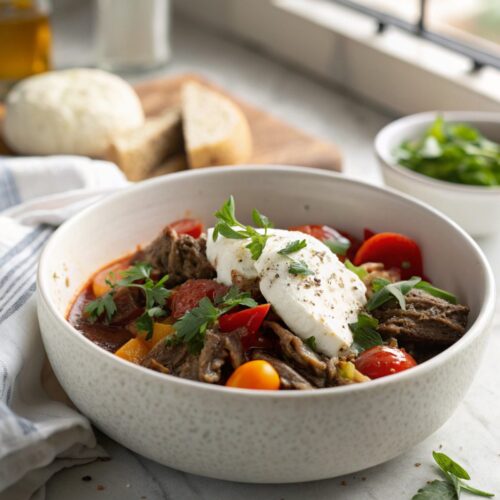
Italian Pot Roast Straccato
Ingredients
Main Ingredients
- beef chuck roast
- olive oil
- onion
- garlic
- beef broth
- red wine
- diced tomatoes
- carrots
- celery
- bay leaves
- dried rosemary
- salt and pepper
Instructions
Steps
- Pat dry the beef and season with salt and pepper.
- Heat olive oil in a Dutch oven and sear beef on all sides until browned.
- Remove beef and sauté onions and garlic in the same pot.
- Return beef to the pot and add beef broth, wine, tomatoes, carrots, and celery.
- Stir in bay leaves and rosemary, then bring to a simmer.
- Cover and cook on low for 2-3 hours, then let rest before serving.